Friday, February 19, 2010

Guerrilla Boot Camps Coming Up

Time to start thinking about getting approval for Guerrilla training in 2010. How to do more with less.

Seminar room Larkspur Landing hotel Pleasanton California
(Click on the image for more details)

Upcoming options:
  1. Two-day, entry-level Guerrilla Boot Camp runs Mar 25-26
  2. Back-2-back Boot Camp and full Guerrilla CaP course runs May 6-14
All Guerrilla classes have a certification level 1, 2, 3, but there are no prerequisites at this time. For those of you coming from international locations, here is a table of currency exchange rates.

We look forward to seeing all of you here!

Friday, February 5, 2010

Guerrilla Mantras Now Updated on Twitter

Those of you in the trenches carrying out performance analysis and capacity planning, perhaps doing it off your own bat, often find yourself in the position where you wish you could point quickly to a more authoritative list of reasons in support your goals. It can mean the difference between convincing your management or not.


To this end, the Guerrilla Manual is provided as a pull-out booklet in the rear jacket of my Guerrilla Capacity Planning book. Now, for an even more rapid-fire response, Guerrilla mantras (140 characters or less) are automatically posted on Twitter. Look for the GMantra tag.

Wednesday, February 3, 2010

A4 (ain't just paper anymore): Apple's New Chip

In case you missed it, with the advent of the iPad, Apple Inc. has entered the CPU business. While many pundits are still scratching their heads and wondering, "Who needs a giant iPod Touch?" Chris O'Brian notes:

"For the first time, Apple has built it’s own chip for a product. For years, the company has worked with others, first Motorola and then IBM, to build its processors. But for the iPad, the company debuted its A4 chip. The chip came via its acquistion of P.A. Semi in 2008. Building its own chip reportedly was one of the key reasons Apple was able to bring the cost of the iPad down. But early reviewers have also noted the iPad’s speed at rendering Web pages. The A4 potentially puts Apple in a position to build more of its own chips, and it also sets up a new rivalry against Intel for the mobile computing business."
Apple has built chips before; he means home-grown microprocessor.

Tuesday, February 2, 2010

NorCal ORACLE User Group Meeting

The 2010 Winter noCOUG Conference will be held at the CarrAmerica Conference Center in Pleasanton, California, on Thursday, February 11, 2010. Attendance is $50 for non-members. If you're planning to attend, then you will need to RSVP online.

I will be presenting both:

Monday, February 1, 2010

Meanwhile, Back at the Ranch ...

Just returned from 2 months in Melbourne, Australia to discover this is my "welcome home" from El NiƱo.

Happy New Year!


Tuesday, December 1, 2009

Guerrilla Capacity Planning: The Movie

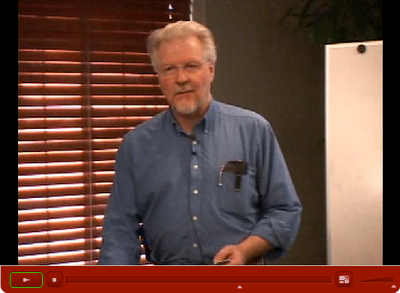
For those of you who weren't able to attend the recent Guerrilla Capacity Planning training live in California, here's a small sampler of what you missed (not shown are the high quality lunches we provide):

Guerrilla Capacity Planning class Nov 2009
Instructor: Dr. Neil Gunther

Thomas Crosman did an outstandlng job of getting the entire 5-day class (that's more than 30 hours!) recorded as digital bits—all on very short notice, I might add. This ain't no YouTube vid. The plan is to make this GCaP class available online. Stay tuned to this blog for announcements about when it will appear at a theater near you.


But there's nothing like live! So, the 2010 training schedule has now been posted. The dates are tentative until we finalize the contracts with the hotel, but you may as well start harassing your management to cut that P/O now. :-)

Oh! And if they need a little extra convincing, they can check out the testimonials.

Season's Greetings!

Tuesday, November 24, 2009

GCaP Class: Sawzall Optimum

In a side discussion during last week's class, now Guerrilla alumnus, Greg S. (who used to work at Google a few years ago) informed me that typical Sawszall preprocessing-setup times typically lie in the range from around 500 ms to about 10 seconds, depending on such factors as: cluster location, GFS chunkserver hit rate, borglet affinity hits, etc. This is the information that was missing in the original Google paper and prevented me from finding the optimal machine configuration in my previous post.

To see how these new numbers can be applied to estimating the corresponding optimal configuration of Sawzall machines, let's take the worst case estimate of 10 seconds for the preprocessing time. First, we convert 10 s to 10/60 = 0.1666667 min (original units) and plot that constant as the horizontal line (gray) in the lower part to the figure at left (click to enlarge). Next, we extend the PDQ elapsed-time model (blue curve) until it intersects the horizontal line. That point is the optimum, as I explained in class, and it occurs at p = 18,600 machines (vertical line).

That's more than thirty times the number of machines reported in the original Google paper—those data points appear on the left side of the plot. Because of the huge scale involved, it is difficult to see the actual intersection, so the figure on the right shows a zoomed-in view of the encircled area. Increasing the number of parallel machines beyond the vertical line means that the elapsed time curve (blue) goes into the region below the horizontal line. The horizontal line represents the fixed preprocessing time, so it becomes the system bottleneck as the degree of parallelism is increased. Since the elapsed times in that region would always be less than the bottleneck service time, they can never be realized. Therefore, adding more parallel machines will not improve response time performance.

Conversely, a shorter preprocessing time of 500 ms (i.e., a shorter bottleneck service time) should permit a higher degree of parallelism.